Sunday, February 27, 2011

Magnetic Color


This may be one of my favorite purchases ever. I bought these magnetic color strips in Washington D.C. at the National Gallery of Art gift store. I was with my sister, Amy, and both our heads were practically spinning with all the wonderful things to buy—little packets of origami paper, Wayne Thiebaud cake note cards, Andy Warhol posters, Modigliani art cubes—what a gold mine.


But it's the magnetic color strips that got me. And they were on sale: only $10.98 for colors such as Cranberry/Canneberge/Arandano and Leaf/Feuille/Hoja and Petal/Petale/Petalo.


Of course these are highly impractical. Right now they are stuck to the side of a filing cabinet in my study. But quality of life is important, and these magnetic colors make me happy.

Friday, February 18, 2011

My Crafty Affair


Something is happening to me in this, the dawning of my middle age: I have become "crafty" as my mid-life crisis.


It used to be that a trip to Joann Fabrics or Michael’s would bore the shit out of me. I remember dawdling behind my mother while she took light years searching through bolts of calico and packets of zippers and cards of buttons. Y-a-w-n. But now, I have projects. I come with a list. Just last week I bought three plastic doll heads, Stretch Magic bead and jewelry cord, a #4 X-Acto knife, and Prym Creative upholstery needles.


This is not really me, I think to myself and even say to my husband. I don’t “craft.” In fact, the very verb, “crafting,” sends waves of discomfort over me, sounds too “country charm” and unfashionable and dowdy.


I'm a professional working woman, after all, who has struggled and sacrificed to get where I am today. Prior to my mid-life “crafting” crisis, I thought these things were mutually exclusive: to be a career-driven woman and to be someone who made things such as dolls or bracelets. Where did this idea, this snobbery, come from? My mother never had a professional “career,” so to speak. She worked one odd job after another: drug store clerk, cleaning lady, factory worker, but during all of these stints she was always creating in high gear. She hand-stitched quilts for everyone she knew; she knit hats, socks, tiny doll sweaters, mittens, slippers; she sewed her own—as well as my—wedding dress. Then there was the constant flow of flannel pajamas, curtains, tatting, table runners, teddy bears: all handmade.


It wasn’t until the very end of her life (halted abruptly) that she became a “professional” quilter for profit, buying a high-tech, long-arm quilting machine with a small inheritance from her parents and setting up shop in her very own den. She was finally in business! Doing something she loved while also getting paid for it. I was so incredibly proud of her.


After she died, I sold her quilting machine on Craigslist to a woman who promised me she would treasure it and use it well. Incomplete quilts still hung off hangers in my mother’s den. I admired them, wondered if I might one day learn the skills to finish them, but then thought: no. How could I? I didn’t do well working with my hands. I lived a life of black and white, words on paper, words on screen. As a college professor and a writer, the majority of my time was spent dealing with text—writing it, revising it, analyzing it, grading it, reading it, consuming it, fretting over it.


My mid-life “craft” crisis, I realized, was me reaching out to my mother’s rich talent and trying to absorb any bit of her I could. As I made hand-sewn valentines this year, I liked to think she could see me and smile—and maybe smirk, too. She'd no doubt find it amusing and somewhat ironic to see me laboring over my "crafts" when I'd spent the majority of my life completely uninterested in such things.


It’s true that with papers to grade and classes to teach and a reading series to run, my craft projects often end up by the wayside. But, for comfort, I keep my mother’s antique metal picnic baskets filled with fabric and tins and, let’s face it, junk, right beside the desk where I work. Every now and then when my neck gets sore or I grow overwhelmed by all the text I have consumed, I take a break and open one and dig around. There’s so much beauty and chaos inside.


I remember my mother as I try to create something of beauty in this world.

Saturday, January 22, 2011

The Other Side of the Desk: On Being a Student Again


I’ve taught college for almost twenty years, but it was only recently that I got an itch to actually take a class myself. Perhaps the bleak and monotonous winter had worn me down. Perhaps I was hungry for some new interaction. Perhaps—dare I say it?—I was bored. I had a long winter break, and decided to try out three different classes.


I. Poetry Boot Camp


Just the title was a bit terrifying, especially since I’m primarily a prose writer, but lately I’ve been interested in language and sound and I thought: why not? I was late to the first class, which was held in the instructor’s apartment in Rochester, and when I walked into a group of eight people sipping wine and chatting amiably, no one said much. The instructor’s cats slunk around the living room and made me nervous. I checked everyone out and made some assumptions. We did not introduce ourselves, but were instantly catapulted into a writing exercise. From a handout, we were to choose 3 items and write a 14 line poem using those words. “I’m setting the timer for 13 minutes,” the instructor said. “Go!” She scuttled off to the kitchen.


It’s hard to fully express the panic I felt. Holy shit, I thought. This is insane. I don’t even know these people. WTF? I chose the words, “orange, cloud, and mother” from the handout. My whole life had been consumed recently by grief ever since my mother, and then, shortly thereafter, my father died. I knew I would plow into the grief—I couldn’t help myself—but then I worried about being a “downer.”

This was my first epiphany about what my students go through in my classes. The performance anxiety in a writing class cannot be underestimated. It looms large, beginning with the very content you choose, then what to leave in and what to leave out, and then, of course, having to “share” what you’ve written with the class. In my own courses, I’ll say, “Okay! Write a scene in which a father and son are making a stir fry together and having the ‘sex talk.’” Go!” I expect them to do it, share it, and feel okay about it. What an enormous expectation.


We did eventually introduce ourselves, which settled my heart a bit. We dragged shrimp through cocktail sauce, smeared blue cheese onto crackers, laughed when the cat started batting someone’s head on the couch. Again, it’s hard to explain: I wanted to be liked and to “fit in,” but I also wanted to prove that I was a good writer. There seemed so much at stake, both socially and artistically. And let’s be honest: you compare yourself with your classmates. I was quite taken by the French teacher’s poems, plus, she was so warm and had such an easy smile, I instantly liked her. The psychologist seemed remote, and used cerebral language play. The artist was the hippest dresser, had beautifully arched eyebrows and wrote about her South American mother. I tried to gauge where I fit in, writingwise. Somewhere in the middle, I thought, or a teeny bit above middle? Oh god.


Why did that matter at all? I was ashamed to admit it, but it did. And this helped me to understand my students even more so.


II. Yoga: Private Session


We met on a snowy night in the large yoga studio above the old bookstore. I was as antsy as if it were a blind date, though I knew the instructor from various parent/town events: still. She was so tiny I could easily lift her up in my arms and carry her around. Quiet jazz was playing. I told her about my bad back, how I’d tried everything, how desperate I was for help. She rolled me out a mat, but stood looking me up and down first.


“Hmm,” she said, ‘’you have hips, and curves.” She walked behind me. “Stand how you normally stand,” she said.


I did. She ran a hand up and down my spine.


“Yeah,” she said. “That’s showing a lot of vertebrae. You want no vertebrae to show. See,” she said. “Like this.” She stood and lifted the back of her shirt up so I could see. “See how no bumps are showing on my low back?” I did. I even felt it. It was so indented it was like a deep valley.


She said we’d have to start with some basic biology, and dragged a big skeleton out from the corner. She laid it down on the floor very gently between us as if it were alive, then
began manipulating the skeleton’s hips. “Your pelvis is like a bowl,” she said, “See?” She shoved her fist into the skeleton’s pelvic cavity. “The muscles below have to hold everything up. When you have babies, especially very quickly like you did, these muscles can get torn and weaken.”

I nodded and made eye contact. We were sitting close to each other and I wanted her to know how attentive and focused I was. But I was also distracted. How would learning about my bowl of a pelvis help my back? I’d tried yoga before but it gave me a headache and caused my mind to race like a hamster wheel. As she continued to explain the importance of lifting the pelvic floor, I started wondering if “Modern Family” would be a new episode tonight, and whether I should make popcorn or have cheese and crackers for a snack and whether or not we were out of red wine. Oh my god, I thought. This is exactly what my students did! I was no better than them! I just wanted to be done and go hang out at home and check Facebook and watch TV.

Eventually we did some planks and bridges. I held the positions precariously and grunted while she scribbled instructions down for me to take home. She drew little stick figures in various positions. She underlined instructions and used exclamation points. Later, I would read these while drinking white wine in front of the TV. “Remember, the pubic bone is the high point,” she wrote. “Imagine a marble rolling from the pubic bone to the belly button.”

I tried to imagine the marble and to perform the pelvic lifts from a sitting position, but it was not very effective as I simultaneously ate chips, texted my sister, watched TV and checked Facebook for all the latest. Perhaps I was more like my students than I thought.


III. Simple Sewn Book Workshop

I took this class with two friends: safety (and fun) in numbers. It was in our town’s new art gallery and sun burst through the big windows onto our work table. The teacher was loud, boisterous, and informal. At first I found her off-putting, but then I warmed to her. Sometimes she was so exuberant about the subject that her instructions were unclear, and I found myself frustrated. I mentally filed this away for my own teaching: remember, students are often just beginners so don’t get so carried away and be very clear about the basics.


As someone with degrees in English and creative writing, I had never had such a tactile class before, and found myself fascinated by all the equipment and materials: waxed linen thread, a “bone folder” for making sharp creases, a Japanese screw punch, binder’s needles. I liked the “thingy-ness” aspect, though the mess and chaos in front of me was a challenge.


One of my friends was very precise about measurements and took her time and care. My other friend was very motivated to learn as much as possible and to gain and practice skills. I found myself somewhere else—wanting to magically channel some of my mother’s creativity, wanting to gloss over, wanting to goof off and rush through. This last piece—the rushing—bothered me. “Do I really have to measure this?” I asked the teacher. “Or can I just eyeball it?”


She said I could eyeball it, but when all was said and done, it didn’t look very good. My two friends’ books looked better. Then, like a toddler, I got hungry and couldn’t concentrate. Luckily, the teacher had brought a bag of oranges and giant chocolate chip cookies. We ate and told stories, and though I didn’t feel the same performance anxiety I felt in the poetry class, I did sense in myself a desire to tell stories, to relay information about my life; I’m not sure why. It wasn’t likely I’d ever see the teacher again. But it did, again, serve as a lesson to me, pedagogically speaking. So much of the learning experience is about learning about yourself, especially in relation to other people. In just a single class, I had learned 1) that I hated clutter, 2) that I had a better time learning if personal information was shared, 3) I cared more about speed than precision (disturbing), 4) I was a chatty student, 5) lack of clarity irritated and frustrated me, and 6) I could only sit still and pay attention for 30 – 40 minutes, tops.


Conclusion #1 : taking these three classes has helped me as a professor more than anything I have ever done, and I will take it all with me as I roll into my 2011 classes and beyond.

Conclusion #2 : I love homework.

Tuesday, December 21, 2010

The Precipitous Girl


On Having a Daughter Who Is Not Like Me, or The Precipitous Girl

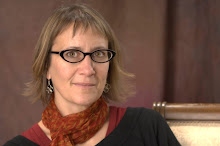
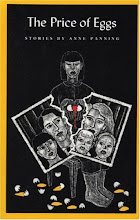
by Anne Panning


My daughter is high-waisted and low-voiced. Already when she bends down to pull on pajamas, I can see she will not have flared bat wing hips like mine but will stand solid and narrow like a Greek column, and as strong. She will be tall, trim, singularly herself. At six, she wears skinny jeans and tissue tees. She wears her soccer medal to school. For breakfast she likes Nutella on bread, untoasted, with orange juice, no pulp. I cut her bangs very short like my own until recently she told me she wanted to cut her bangs off, which I only realized later meant to grow them out. I will allow it, begrudgingly.


On the day of her birth, I ate an apple on the couch and my water broke. I could feel it ping inside me like a rubber band. It was 1:00 p.m. on a Friday in May. “But no one has a baby during banker’s hours!” I said to my husband, who was in the kitchen fixing a sandwich. But she came very quickly in what would later be called in my medical file, “a precipitous birth.” Mark drove wildly along the thin curved stretch of the Erie Canal; I couldn’t speak. I’d like to say I remember looking out at the water and seeing how sunshine sparkled upon it, but the fact was I had to squeeze my eyes shut against tears of pain.


At the hospital, I crawled out of the elevator on my hands and knees. Because of the unseasonably warm May we’d been having, I was wearing a red t-shirt, shorts and flip flops. In photos taken just minutes later, holding my daughter in my arms, I would still be wearing the red t-shirt, my hair and glasses not even mussed since the birth was so fast there was no time to get into the requisite hospital gown. Later, the red t-shirt would be passed down to other pregnant friends and deemed Lucky. When it came to tortuous pain, we all agreed, speed was the talisman.


My first child had been a boy, so when I was pregnant the second time, I was desperate for a girl and said so, publicly. This made people uncomfortable. “Listen,” I said, “there’s an important distinction here. I won’t be unhappy if I have another son. But I will be unhappy never to have had a daughter.” Still, people thought it inappropriate, including my own mother, who I think worried about how to handle my disappointment if I had another boy. “No, no!” I kept trying to explain. “I won’t mourn what I have. I’ll mourn what I don’t have.”


We chose not to know the gender of the baby beforehand, even though people—sometimes total strangers —would react with unveiled hostility to our decision to wait.


For months before I had my daughter, I knew I would name her Lucy. Like my son, she would have two middle names: one Hawaiian, and the other, my husband’s last name. She would be called Lucy Kahala Rice Panning. We thought it very elegant and lyrical. But when she emerged so frantically fast, our thoughts pinballed to indecision and chaos.


There was a dry erase board on the wall in my hospital room, and Mark wrote “Lucy” on it in his tiny scrawl. I have always been shamelessly proud of my handwriting, and wished very much I’d written the name on the board. It didn’t look right. Plus, this baby girl in my arms was already so intense, I could see, yet so delicate, too. She could not be named Lucy. My grandmother, a tall, willowy redhead who’d been a nurse in the 1940s, had been a Lucille. But not a Lucy. Lucy. Lucy was bawdy, crass, a little pushy maybe and—listen to the word—“loose-y”: loose.


“It isn’t right,” I said to Mark. “Write ‘Lily’ up there.”


He did. Lily Kahala Rice Panning. I’d always loved the Victorian era gem and flower names: Pearl, Rose, Ruby, Violet, Opal. But I also knew lilies to be hearty and resilient flowers, not prone to easy wilting or fragile stems. A lily was a perennial, would grow independently, wildly, regardless of conditions. A lily stood up tall, announced itself loudly like a trumpet. That was the kind of daughter I wanted.

* * * * *


When Lily was just two years old, she hid cans of 7-UP in her dresser drawers. At age two and a half, she potty-trained in Vietnam. Knowing we’d be living there for 6 months, we’d shipped cartons of diapers over beforehand, but they arrived too late. Lily learned to go over pits, holes and squat toilets. Later, we gave the diapers away to our Vietnamese neighbors, who used them for floor mopping.


Lily is now six and has an ipod, and on it there is Jonas Brothers, Katie Perry’s “California Girls,” Queen’s Greatest Hits, “Soul Sister,” and some Jason Mraz. She likes to pretend she’s a pop star and will sometimes break dance on her brother’s bedroom floor while he shines the Halloween strobe light on her. She is always the performer and he is her techie crew. Lately she has been writing her own song lyrics, and here are some I found the other day written in blue magic marker: I want to be a pop star! I want to be a rock star. Yeah. I have a microphone. And I can dance. Yeah. When you are a pop star.


At six, Lily possesses a feistiness I don’t know that I ever had or ever will. When I was a first-grader, I wore calico dresses and tights with tennis shoes and clung to my mother’s leg when we’d go out. I was shy, quiet, had a very difficult time raising my hand in class (something that followed me all the way through college). At a recent parent-teacher conference, the report said of Lily: reads above grade level - exceeds academic expectations - friendly – a bit too talkative at quiet work times – could work neater –- a pleasure to have in class. It was a good report, academically speaking, but as an educator myself, I knew her kind—the chatty pleasant student that you like having in class but who can’t seem to turn it off and sometimes bothers with her exuberance and eagerness to entertain others. She’d be the one I’d have to bust for texting in class.


Lily walks with confidence and conviction. In the mornings, we can always tell if it’s Lily coming downstairs or Hudson because she stomps loudly and announces herself from several rooms away before entering: “Everybody! I’m up!” She expects a lot out of the world, and assumes it will freely give her what she needs and wants. She can be bitchy and irate when her expectations aren’t met. “But why can’t Santa get me the Wonder Jet Flight Simulator from the catalogue?” When I tell her it’s $200 dollars, which is a lot, even for Santa, she resists. “But what about that he has elves who can make it, or who could just go shopping and buy it for him?”


Often, though, it’s an intangible desire, some sought after quality or trait that she dreams of inhabiting. We were watching football the other night when the Dallas Cowboys made an amazing 101-yard interception and touchdown. I never watch football, but found myself cheering aloud at such an amazing feat. “Do you think I could that?” Lily asked. I said, “Oh my god. Of course you could.” But she seemed worried. “But what if I couldn’t catch the ball?” she asked. “You would,” I said. “You’d practice a lot and learn, just like these guys.” She sat back and crossed her arms, confident that the deal was sealed: yes, she could absolutely be a millionaire NFL football player someday. If she so chose.


Her “go-getterness” is not always so heartwarming, though. She can be snarly and surly and borderline mean. I once overheard her berating her older brother for a very slight misdeed—something Nintendo-related involving a SpongeBob game—but the vitriolic tone of her voice made me stop what I was doing and put my hand to my mouth. It was pure venom. She can also be cocky and inflated in her assumptions about herself. Recently her brother had a friend over and they made an elaborate fort. Two nine year old boys, they didn’t want a little sister hanging around. But she wouldn’t relent.

Later we found a letter she’d written to them and shoved under their door.

It read:
I want to go in your room and go in your fort so one of you has to choose. I feel sad. So write to me that says what you want to do. Write it on the back.

When they wrote back and said she could come in the room but not in the fort, she was pissed. She wrote them again:
But I never get to go in the fort. P.S. I am mad at both of you.

Later, she spent hours with them in the fort.

Still, this is the complicated part: I celebrate all of these traits in Lily because she is a girl, just as I celebrate the way my son loves to cuddle in velvet and fleece blankets, or the way he notices a new pair of earrings I’m wearing, or the way he loves to browse through the dollar store with me, leisurely humming his pleasure and comfort beside me as we look. I want a strong girl and a sensitive boy, and realize that everything we do, everything we don’t do, whether consciously or subconsciously, feeds this. Soccer for Lily. Piano for her brother. No football paraphernalia clothing for her brother. No princess pink froo-froo for Lily. In fact, when Lily was enrolled, at age 4, in a local dance class and was required to clip and spray her bangs back for both uniformity’s sake and to emulate a true “ballerina,” we pulled her from the class and brought her to Garth Fagan where boys and girls both danced in a tough physical way without gender distinction.


My mother, were she alive, would roll her eyes at so many of our battles. “You two overanalyze everything!” she’d say. And it’s true. When we suspected Lily was lying one day about how many Pez candies she’d eaten, we sent her upstairs so we could rally about it and brainstorm a proper response. “It’s just PEZ, for god’s sake!” my mother would say. But it’s so much more than that, I’d argue.


My mother expected so little from the world, and got exactly that much. Instead of a decent kitchen or respect or a solid paycheck, she got a husband who played the lottery and hid scratch-offs in his underwear drawer. She got two sons who could wait for hours in sub-degree cold to kill a deer but not remember to call her on Mother’s Day. She got two daughters, one who would stay close to her and live nearby, and me, who would find ways to get what I wanted, but sometimes at great cost. My daughter must never know this, how hard it was, how hard it is, how much struggle is ahead of her.


But here’s another complicated part: I, female, love to shop. Mark, male, loves to watch football: Okay. But we both love to cook. Mark does all the laundry. I mow the lawn. Together we make all the big financial decisions. These are the good examples. Our children will also, however, experience us in all our contradictions and flaws and hypocrisies. We both probably drink too much wine in front of them, which I was reminded of the other day when Mark came home with a case of pinot noir and both kids argued over whose turn it was to fill the wine rack. One day Mark wants to throw them in the air and wrestle, and the next day he says, “Not now. I have to finish this chapter.” I will go on a spree of ice cream buying and let them have dessert every night until one day I find it too much and say, “No dessert! You don’t need to have dessert every night!” I’ll want to be alone and go hide in my study. Mark will disappear for 10-mile runs and come back only to check his email and ignore them. None of these behaviors are particularly gendered, or so we like to think.


But Lily, as my daughter, looks at me differently than my son. She is watching me closely with her dark brown eyes. She is waiting for a sign, a nod of permission to follow, an admonition to keep up with me, and then, pumping her arms—to race ahead of me with precipitous speed.

Monday, September 6, 2010

On Want Ads and Wanting


Thanks to my friend, M, my interest in want ads has been reinvigorated. This past summer we were talking at a graduation party under a big maple tree. Nothing major—just catching up on his camping trip to the Adirondacks, my visits home to help my father in Minnesota, and somehow the subject of want ads came up. I like M. He takes an unconventional approach to most everything: dumpster dives to find treasures, works at a wine bar, bikes across the country, understands the need for and appeal of “secondhand.” He is smart and sensitive with warm brown eyes. It takes time, we agreed, a special kind of person—a little old-fashioned optimism and even nostalgia—to place a want ad. We both admitted to reading the want ads voraciously.

After we spoke, I began ripping particularly interesting want ads out of the paper—teeny tiny rectangles of fine print. I taped them onto index cards.


Sometimes they are strangely sad and depressing:


Sometimes they are fueled by anger and injustice:


Seriously! Society has gotten to the point where people

are stealing garden decorations? I had bought a house
that
had no curb appeal whatsoever and spent my
money and
sweat building a nice garden. My
grandmother gave me
her ducks she has had
since the 80’s and my mother
bought me a house
present, a cute little dragon. I
watered my
flowers one day to discover them gone!
I couldn’t
believe someone would steal my ducks and
dragon.
I hope they bring you AWFUL LUCK!


Sometimes, a strange sell:

TRY OUR NO SNEEZE Black Pepper! Freshly milled
daily. 10% off with this ad. Stuart’s Spices, 2322 Lyell

Ave., Rochester. 585-436-9329.


Or, the promise of fame and glory:

MOVIE EXTRAS TO STAND IN BACKGROUND.

Experience not required. Earn up to $200/day. 1-877-
247-6183.

Even though we were having people over for dinner, I simply had to call the movie extras number this past weekend. I was put on hold for a long time, but was able to get my German potato salad ready while I held the phone up to my ear. Xylophone music played, twangy and slow. It sounded vaguely like porn music. A recorded voice said, “Hello and welcome to Casting Services. We help lots of people every day. We can do the same for you.”


While I waited, I fried half a pound of bacon and saved the drippings. My potatoes boiled and cooled. Finally, when "Victor" answered my call, I panicked.

Me: Can you tell me more information about the job?
Victor: Are you eighteen years or older?

Me: Yes.

Victor: Can I have your zip code?

Me: (nervous) Yes. 14420.

Victor: What days are you available?

Me: (panicked) It varies.

Victor: (reading from a script) In order to make scenes look more
natural,
movie directors hire extras to stand in the background.
Me: Okay.

Victor: TV and motion picture companies are looking for acting,
modeling,
dancing…
Me: What kind of companies are these? (PORN! I thought.)
Victor: Companies such as MTV, Discovery, NBC, CBS...

Me: (to myself) Yeah, right.


Victor went on to tell me that for just $1.98, I could place my portfolio on their website and would be contacted by a casting company within 90 days. “Just any photo snapshot of yourself is fine,” he said. He had a very strong Indian accent, and I began to wonder if this phone service was based in India. When I asked if there were any other fees, he said that they keep no secrets from their clients and for just $34.90 a month, I could become a member. I asked for their website and he gave it to me: www.casting360.com. But my Internet went down. Thank god.


Later, I began to wonder what Craigslist might dredge up. Something about want ads online took away the mystique, but still. I had once put an ad on Craigslist for someone to sew kitchen curtains for me after my mom died (she could sew anything). I finally settled on someone I'll call "Mary." My first warning sign should've been that her daughter contacted me, not her. "Yeah, my mom can do your curtains," the girl said. She was maybe 20 and sounded like a smoker and a hardass. There was a lot of yelling in the background, but I thought: I love the idea of someone's mom sewing my curtains! I hired Mary, and she began to stalk me just a little. She also charged by the hour, my second big mistake.

One night I saw her at the local bar, Barber's. Her husband, a renowned (incompetent) lawyer, was ignoring her as he played darts with his friends. As soon as she saw me, she instantly scooted over and put her hand on my shoulder. "I still have the valances for your kitchen," she said. "I'll need to bring them over and double-check the measurements." This was a lie. She'd been lording the final valances over me until I'd allow her into my house again. She was lonely and sad. She was probably 50 years old and kept telling me she'd just run some moose border around her family room and that I should come and see it. Repeatedly, she'd stop by and sometimes I'd have to lock the doors and hide. Finally, I pulled the plug. I told her I didn't want the final valances. I sent her a check in the mail. Sometimes, though, I still see her at Barber's, and from her bar stool she'll wave at me and smile.

Craigslist is complicated, though. There are so many categories it's hard to know which one is suitable. One ad from the “general for sale” section caught my eye:


Female Rat for SALE (CHEAP) - $5 (Mount Morris NY)


Hi, I was holding a rat for a friend but she can no longer
keep
her and so I am
offering to sell her cheap to a good home.
SHE IS NOT SNAKE FOOD.
Her full name is Koko Chanelle
but usually it’s just Koko. Also, the big
reason I don’t want her
is that she seems to love biting ME. NOT
everyone JUST
me. She’s very beautiful and likes an occasional treat of

Cheesies (small pieces) and maybe a chocolate chip.
She LOVES cheerios.
I am willing to give whoever comes
and gets her a bag (like from walmart)
of her bedding so
she feels comfy until she transitions to her new bedding,

and (if I have extra) some of my homemade rat food.
I need her gone
before i get my other female for my
project for school!


I try not to, but I keep thinking of this girl with the rat. Did she get rid of it? I wonder. And what project at school requires a student to produce her own live rat?
And what is her recipe for homemade rat food?

Under craigslist "Lost+Found":

Re chewy
Chewy was missing for a week and we
couldn't find her, sad to say she was found in the
canal and someone was nice to take her tags we live in
albion but she was found past brockport

There are a lot of misspellings and grammatical errors on craigslist, which I try not to worry about. But what really nagged me about this ad was: to what end? What did it hope to accomplish or suggest or ask? Was it simply informing the general public that their dog had been found dead? Or was it an indirect thank you to the person who took the dog's tags and presumably returned them to Chewy's owner?

Finally, under "Rants+Raves":

What would Jesus do...?


for a Klondike bar?


Who would go out of their way to post something like this?
Who would go out of their way to read it?


Wednesday, August 25, 2010

Gazpacho with Shrimp


I found this recipe lying on an empty seat in the Minneapolis airport. It was clipped from some newspaper—I think the St. Paul Pioneer Press. I snatched it right up. What a find.

2 1/2 pound tomatoes, cored and roughly chopped
2 medium English cucumbers, peeled, chopped

2 celery stalks, coarsely chopped

1 green bell pepper

1 1/2 C V-8

1/2 C water

1/2 C olive oil

1/4 C cooking sherry

1/2 C flat leaf parsley, chopped (curly parsley is too strong)

1-2 T sugar

3 T tomato paste

1/2 t paprika

1/4 t cayenne

2-3 t salt

1/2 t pepper

1/2 pound small shrimp


In large bowl, stir together all coarsely chopped ingredients. Cover and refrigerate for 2 hours or overnight. Working in batches, transfer chilled mixture into food processor. Pulse until soup is coarsely pureed. Repeat as needed with the rest. Stir to blend batches in a large bowl. Taste, adding more salt and pepper or sugar as you like. Cover with plastic and refrigerate several hours.
Serve with cold fresh shrimp on top.

Note: I don't know why you have to chill the coarsely chopped ingredients before blending them. I suppose you could omit that step. All I know is, this is the best gazpacho I've ever had because it's so tasty yet so gentle on the stomach.

Thursday, August 5, 2010

Can a Person Read Too Much?


Recently I bought two soft comfy recliners at the thrift store. They're not very attractive, but I do like the way they smell slightly of baby powder and age, and also the way the cranberry padded velour envelops my body when I sit in it. I'm guessing they belonged to an old couple who has died, or maybe one of them has died and the other had to go into a nursing home; sometimes it makes me sad to think of them. Anyway, they were $25.00 each, a steal really, and though I wouldn't dream of putting them in our real living room, I've placed them side by side in our back sun room—a jumble of secondhand furniture, lacrosse sticks, stray Lite Brite pegs, dog toys and giant picture windows that look out into the backyard. This is where we read, my husband and I. Sometimes we read and then we nap. We jack the recliners way back, spread the books flat upon our stomachs, and doze. We wake, read some more, refill coffee or wine, depending on the time of day. We are very much like retirees, even though our small children mill around us playing Legos or asking if they can have some more Hawaiian Punch or begging to have Van or Kiera for a sleepover. The kids read, too, of course. We keep a large wicker basket of kids' books in the sun room. We have family reading time every night from 7:30 to 8:00. Our kids know that to live in our family is to read. Sometimes, though, when my daughter, Lily, asks me to play Old Maid with her, say, or really, really wants me to log her onto webkinz.com, I'll say, "Just a minute. Mommy has to finish this chapter. See?" I'll show her the book, how many pages I have to go, and she'll sit right beside me, waiting.

We have jobs, of course, my husband and I, but they also involve reading as their primary element. We're both professors, and there are always books to sample, review, read, study, test, assign. We live in books. We live for books. We write books, too, but that's another story altogether.

* * * * *


Recently I figured out that I read approximately 2.5 books a week on average. That's 130 books a year. During a Cape Cod vacation this summer, I read 2 novels and 1 memoir in 7 days. I spend a great deal of time figuring out what to read that involves a complicated tour through amazon.com, Liftbridge bookstore and the Seymour public library. Lately I've been drawn to memoirs about grief and loss (The Mercy Papers, Making Toast), autism (The Boy Who Loved Tornadoes), domestic abuse (Crazy Love), and parenting (Waiting for Daisy, Lift). Thrown in between are always, always, novels.

When I read an excellent book, I type the title into amazon.com, then click through the "Customers Who Bought This Item Also Bought" section. I then choose roughly 5-10 books, then go to the "Search Inside" feature and read the first pages of each book. Then, I make a short list, see if any are available at my local library; if not, I go to Liftbridge Bookstore to see if they have them. If not, I search bn.com and then do the "Check Store Availability" to see if I can get it at the Greece Ridge Mall Barnes & Noble. I also write down in my journal the title and author of every book I've read, then give it a star ranking, 1-5. Currently I'm reading Ann Hood's novel, The Red Thread about Chinese adoptions (it's going to get five stars for sure), and I already know what's next: People Are Unappealing (Even Me), a memoir by Sara Barron, a woman who started writing porn at age 11, was on the Jerry Springer show, and grew up with a hypochondriac mother and a "homo" father. I have read the first chapter "Lady Daddy" and can't wait.

I detail all of these logistics to highlight how deeply important reading is to me, but also how time-consuming. I have never been one of those people who can find a book lying around the house and read it. I need to plan, hit on exactly the right mood and interest of the moment; it takes time. I also have a fifty-page limit: If a book is not compelling me to get back to it by page 50, it's out. "Life is too short to waste on a half-assed book," I'll say.

* * * * *

Reading is sedentary. To combat this, I'll go to the gym, pound around on the elliptical for awhile, watch the Food Network as I'm doing so (sometimes HGTV if Rachel Ray is the only thing going). I'll put the treadmill on the highest uphill setting and pretend to climb a mountain. I sweat with ear plugs in my ears. Across the street I see people pull up and head into Dr. P's chiropractor office and remember what a bozo he was when trying to fix my lumbar; he was all about sports. "You play anything?" he always asked me, just waiting for a chance to tell me about his glory days as a rugby player. I watch this one red-headed guy I'm pretty sure is a drug dealer wander past in black jeans and black t-shirt on 90 degree days. He's always smoking. He always looks in the gym's plate glass windows with a look that suggests we are all the biggest idiots he's ever seen.

When I'm done, I weigh myself then drive back home. This is how I don't read.

* * * * *

According to tax records, in 2004 I spent $985.48 on books.

In 2005, I spent $1,141.00 on books.

In 2007, I spent $1,150.91 on books.

One year, it reached over $2,000.00.

At this rate, considering I've been reading like this for most of my adult life, this would total, so far, roughly $25,000 spent on books.

Dear god.

What else could that $25,000 have bought, I wonder.

•An old classic Jaguar (my dream car)?
•A trip around the world?
•An in-ground swimming pool?
•A new kitchen for my mother?
•A semester off from teaching?

But, I remind myself, what remains after reading a book is permanent. It can't be lost or stolen or die. I like to think of it as a sort of life insurance against despair and hopelessness. Or like getting another college degree in English over and over and over again.


* * * * *

The problem with too much reading is that it's silent. You don't talk or interact with other people. One time my husband and I had an argument about my reading too much, which was really about the way I sometimes stepped out of our real life and into the world of books. It was true. If you read too many books, too often, there can be negative consequences.

•Lost sleep
•Neglected relationships
•Sadness funk
•Tendency to spout facts at parties and gatherings only to realize they were gleaned from fiction and therefore dubious and unsubstantiated
•Social anxiety disorder
•Fuzzy eyes
•Loss of touch with reality

I could slow down. I could do a book a week, but then what? The only television shows I really adore are "Intervention," "Hoarders" and "Obsessed" on A&E—all documentary shows about people struggling with addictions. I am riveted as I watch these shows, only stepping into the kitchen during commercials to refill my chardonnay. If you can be addicted to buying birds and collecting toothbrushes and cleaning the bathroom, you can also, I'm afraid, be addicted to reading books.