Friday, December 7, 2012

On Teachability


Two creative writing students came to see me yesterday.

The first, I'll call her Claire, looked like a skier: long, thick blonde hair, healthy, vibrant complexion, hearty Patagonia fleece jacket, fur-lined boots.  She'd written an essay for my food writing class about going to the Naples Grape Festival with her father; the essay was all over the place and badly needed revising.  I spent about 30 minutes with her, going over it paragraph by paragraph, and in the process learned that her dad was a pole vaulter (what?), that she was a vegetarian who ate chicken wings, and that she was obsessed with the Hunt Hollow murders that'd taken place at an Allegheny ski lodge in the 1970s (decades before she was born).  There was a warmth about her, an openness, and I noticed her turning her head just slightly to read the book titles on my shelves.  Rarely did I have students who seemed this self-possessed, curious, whole. But what was even more extraordinary about her was that when I suggested cutting whole paragraphs of her piece, instead of balking, she said, "Yes, yes! That's so much better."  Revising on the scale I was suggesting takes bravery and trust.  When I tried explaining why readers didn't need a rundown of all the vendors at the festival, she lit up, and said, "I know!" with such  heartfelt conviction that I was momentarily flummoxed.  It wasn't usually this easy, and I was puzzled. She was definitely not a brown noser, and had always kept a professional distance in class.  What had made her so receptive? I wondered.  We talked for longer than we needed to, and by the end, she was the one coming up with things to slash from and add to her essay to make it better.  Embarrassingly enough, my cell phone rang and I told her I had to answer it because my son was home sick.  She nodded and kept checking out my bookshelves.  "He has pink eye," I said.  She nodded sympathetically. "Well, at least he doesn't have lice!"  We laughed about something else then—I can't remember what—but soon it was time for her to go. As she walked away, I noticed her backpack, neon green and hot pink, DaKinea famous ski boarder brand. Complexity, mystery, followed her out the door.  

The second student, I'll call her Becca, came in and perched on the edge of my overstuffed armchair.  Everything about her read "rigid":  her slender nose, the way her purple beret sat like a perfect bubble around her head, her pale, waxen skin, the silver wire-framed glasses.  In class she got frustrated when I didn't call on her every time she raised her hand, which was constantly.  Her essay was about going to the Rochester Public Market with her R.A. and a bunch of people from her dorm.  Like most first-time creative writers, she included superfluous scenes like riding the elevators down to the van and giggling with everyone on the way there.  When I told her she should cut that, she couldn't understand why and I could feel her whole body repelling away from me.  "Because it isn't very interesting.  It has nothing to do with your experiences at the public market.  And," I said, "it makes you sound juvenile."  She argued with me that college students are juvenile.  She crossed her arms.  I knew this territory well, and felt my impatience flare.  I wanted to get home and go running before my daughter got off the school bus.  I had eaten only a yogurt and felt jagged and empty.  "I noticed there aren't any sensory details in your piece," I said, taking a new tack.  "You say you tried an empanada, but you don't describe anything about it—no taste, smell, texture—nothing."  She had a quick answer for this.  "Well, that's because I don't usually eat things like that and I don't remember anything about it."  The way she said it, arms crossed, indicated the burden was now on me.  I knew I should just let it go: there was no reaching her.  Would she go on to become a passionate and devoted writer?  Probably not. "Well, writers need to be extremely aware and observant of the world.  It's pretty much a job requirement."  She stared at me and nodded blankly.  I body languaged that we were done, shuffling papers and turning to my computer.  "Thank you very much," she said, then stormed off with her friend who had been lurking outside my door and listening to every word. 

Friday, July 20, 2012

The Complications of Pleasure


I have been thinking lately about pleasure and its complications.  For example, when I eat sushi, say, or really good Vietnamese food, I have a hard time holding back my expressions of enjoyment.  I exclaim over and over how good it is, how fabulous and amazing.  Last summer, one of my siblings commented about my "over-enjoying" things.  "God, Anne," this sibling said.  "Why does everything have to be such a big drama for you?  It's always, 'Oh, this is the best barbecue chicken ever!' Or, 'This is the most humid day ever!'  Isn't anything just normal or whatever for you? It's like everything is always totally over the top."
            I interpreted this as a criticism, and have thought about it off and on ever since. How could the expression of pleasure, I wondered, be considered wrong?  Or was it the extreme nature of it that was suspect?  Was it embarrassing? I began to wonder why neutrality was preferred. 
            Growing up in Minnesota, I was surrounded by German Lutheran stoics.  When something good happened, say, an accomplishment like getting a 4.0 GPA in high school, or getting a new car, you were not supposed to "toot your own horn."  I must admit I still subscribe to that, and grow uncomfortable when someone does indeed "toot" (myself included).  Humility was valued above all else, and drawing attention to yourself in any way was considered gauche and unseemly.  Even when the good thing was something as simple as a wonderful meal cooked, the response was still supposed to be metered and mild—or so had been my experience.  I remember my mother standing over the hot stove making a nice meal of calico beans, sweet corn and fried hamburger patties during hot and humid summer evenings.  She'd have a dishtowel tossed over her shoulder to wipe away her sweat as she stood over the steaming pots and pans.  As we ate, my dad scarfing everything down in less than two minutes, my mom would ask how it was.  I will never forget his response.  "Not bad, not bad." 
           Where was the joy? The pleasure?  The appreciation? Or at the very least, the recognition of goodness? 
            So, too, with hardship.
            In Minnesota, even when someone broke a bone or lost their job, the response was always, "Oh, it's not so bad. Could be worse."   I'll never forget my mom telling me that when she gave birth to all four of us children, she didn't make a single sound.  When I expressed shock about this, she said, "Well, I just learned to take my pain like a woman." This statement stuck with me, apparently, as was evidenced last week when I broke my nose.
            My husband, Mark, was out of town, so I took the kids with me to run some errands.  My college had just built a huge new fitness center, and though it was still under construction, they invited all faculty to come and get a free pass.  Why not? I thought. As we walked around the mammoth brand new structure, I was struck by a big open air entrance out to the stadium fields.  Only it wasn't open air. I crashed into a clear glass wall, and the pain was so intense that I can still feel it in my stomach as I write this.
            I stumbled outside.  "Am I bleeding?" I asked the kids.  They said yes.  The college student worker at the desk asked if I needed a Band-Aid. "I think there might be one downstairs," she said.
            "Well," I said.  "I just might need something to mop up this blood." 
            I started retching, got cold-hot sweats, and my head pounded and twisted with pain. I could barely move my jaw.  And what did I do?  I drove the kids home (mistake #1), didn't call anyone (mistake #2), hung over the toilet, retching and sobbing and bleeding, and said to the kids, "If anything happens to me, you know to call 911, right?" (mistake #3).  I heard them silently conferring in the kitchen. Poor things.
            I was fine, I told myself.  It wasn't until three days later, after Mark returned from his trip, that I was finally persuaded that a visit to the doctor was probably a good idea.  An x-ray quickly revealed that my nose was indeed broken.
            The expression of pain, of pleasure, is learned, not inherited. It can take years to undo lessons taught since birth.


Tuesday, April 3, 2012

My Father's Lottery


My Father's Lottery

by Anne Panning

He sits in the Buick under buggy
streetlights. Scratch-offs shed
silver dust onto his jeans as if
they're molting. Later, he'll stuff dollar
winners in his underwear
drawer where they'll settle
like an insect's folded wings. Power

ball tickets curve inside his wallet, warm
and pink as the shrimp he wishes
he could afford for dinner. Each
night they accumulate in fragile
piles thin as the soft moth's wings
that hover against his battered
porch light.

Saturday, March 10, 2012

Driving Instructions: a sonnet


Driving Instructions

by Anne Panning

That night when you leave your mother's
dead body behind in the hospital, make
sure to look back one last time. Don't
forget this is finite, like the last green
slippers she knit you for Christmas
that will last one more winter, then snag
on a stray nail, unraveling right before
your eyes. And whatever you do, take the car
keys from your father, who will insist on driving
home even as the sky clots orange
with clouds of forgetting. "Anyone know any good
jokes?" he will say as he barrels down
the freeway, fine tuning the radio. Say:
no. Say: not yet. Say: let's slow down.


~Lake Affect Magazine, 2011

Wednesday, January 4, 2012

Eight Things You Should Never Buy Generic


1. Ketchup. It's got to be Heinz. Hunt's isn't as sweet, plus it's kind of pulpy, and let's not even talk about generic. Interesting side note: when I was in Peace Corps/Philippines, I learned to eat banana ketchup on almost everything. It was pale orange in color (not sure why) and chunky and sweet and I'd dip jicama strips into it for an afternoon snack or smear it on rice for dinner when all that was being served was fish heads.


2. Tape. It's got to be Scotch. I can say this after spending much of the recent Christmas season wrapping gifts with decidedly inferior store-brand tape. It's impossible to tear off; it doesn't stick adequately to most wrapping paper, and it's too skinny.


3. Mayo. It's got to be Hellman's, though I will also accept Kraft. (Miracle Whip is an entirely different story, and worthy of its own post). When I feel scrimpy and scroogey and occasionally buy the store-brand "salad dressing," I regret it. It's is a strange orangey-yellow color; it's wiggly and gelatinous; it's fatty and too oily on the tongue.


4. Dish soap. I prefer Dawn, but will also occasionally accept Ajax, Ivory or any name brand that doesn't smell like gross-ass lavender perfume or something. Generic will not rise up to proper bubble performance and will peter out in the sink and not cut through grease. It's sad, really.


5. Mac and Cheese. It's got to be Kraft, or, even better, Annie's. My son, Hudson, has recently shaken up the household by introducing Velveeta mac and cheese WITH BACON. Holy shit. I thought it would be terrible but it's pretty good. The biggest problem with generic mac and cheese is how gross it tastes. And also how the powder doesn't mix well.


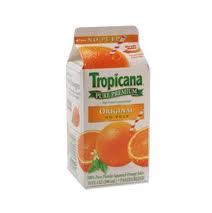
6. O.J. Anything but generic, which is watery and sour—a dreadful combination.


7. It's got to be Jiff or Skippy. Good luck trying to spread generic on your soft bread. It'll rip it to shreds.


8. Diapers. Pampers or Huggies. This one is not negotiable. If you've ever had a baby, you know that cheap diapers do not contain those little curry-colored explosions newborns are prone to, or, god forbid, the later king-size toddler dumps.


...unless you're broke, of course (which I have been many times throughout my life), in which case, who cares! Anything goes.

Wednesday, November 2, 2011

Kindle-ing?


I have a Kindle in my possession. I did not buy it. I borrowed it from the university library where I teach. I got it because I needed to review a library book for a graduate class I'm teaching that was only available as an e-book. As luck would have it, the Kindle was not able to "accept" this e-book because of proprietary amazon issues.


I brought it home anyway, curious.


My children, Hudson (10) and Lily (7), love the Kindle. They think it's great fun to push buttons instead of turn pages. They like zooming around the menu, "bookmarking" their pages, and clandestinely hooking up to wifi. They've been reading fairy tales on it (it came preloaded with these) as well as Treasure Island. Once I came home from work and Hudson was sitting on the couch, reading on the Kindle while it was plugged in, charging. This struck me as strange, unsettling.


Last Saturday afternoon, I found myself finally with some free time to spend with the kids. I said, "Would you like me to read to you both?" and they said yes, then gathered on either side of me on the couch. The first book I read was Fly High, Fly Low by Don Freeman, about two pigeons who live in a big letter "B" atop a New York City building. It was an old discarded library book, hardback with a crunchy cellophane cover. We marveled at the muted oranges, reds, and purples of the sunset the illustrator must have done with charcoals. I ran my finger over one of the pages it was so beautiful.


Next, I read a fairy tale "Little Two Eyes" on the Kindle. I held the plastic rectangle between the two kids, and they argued over for got to push the "Next Page" button each time. There were no pictures. Both kids, I noticed, physically pulled away from me a bit until it was time to push "Next Page." And funny thing—we didn't really know when to stop. Was it a long story? I did notice there were numbers on the bottom of the Kindle, "11%, Locations 424-28, 3790." Were these page numbers? Or was I to assume we were 11% done with the story? Neither, I realized.


I've found myself reacting not against the Kindle, but instead, uninterested in the Kindle. It sits in the living room in its little black case, and though I glance at it, I have not yet been inspired to use it for my own reading. Why is that? I wonder. A. I'm at home. I have books everywhere, all around me. B. There are so many steps to reading on a Kindle. Turn on. Home. Menu. Select text. Press "next page" button. And then, reverse all of these steps when you're done. C. It's plastic and doesn't feel right in my hands. D. It's only the size of half a book. It's like reading a single page over and over. I prefer a two-page spread.


Here are some things you should know:


•I often go whole days without using my cell phone

•I do not have internet access on my cell phone

•I like to be alone a good portion of the time

•I write books of fiction and nonfiction

•I rarely answer our home telephone but stand and listen to who's on the machine

•I feel lonely quite often

•The university loaned me a Kindle 4, not the newest model, and certainly not a Kindle Fire

•I have what I call "The Panning Museum of Antiquated Technology" up in my attic, featuring things like old phones, sewing machines, primitive laptops, curling irons, ancient adding machines, a Rollodex

•"kindle" /verb/ definition: a. To light or set on fire. b. To arouse or inspire (an emotion or feeling)

Monday, September 5, 2011

Purple Slaw, Blogs and Creativity


I was chopping purple cabbage tonight for an Asian slaw recipe I love that also includes peanuts and cilantro. I like to chop it super fine and serve it in a pale bowl for color contrast. As I was chopping, I kept thinking about my creative nonfiction workshop and the blogs that I had the students create for the class. I'd just checked out how they looked, read what they wrote for their first entries, and couldn't stop thinking about them. It's hard to explain how differently the blogs are making me think about my students. It's like they're more fully present, more three-dimensional, more complex. Their blogs are like portals into their other lives that I don't get to see.

I'm not sure how this will play out, what stumbles and bumps will emerge. I do know setting it up has already proven to be much more work than the "regular" way I used to teach the workshop. Still, something about this approach is lighting a fire in my brain and heart. Their blogs let me stay connected to my students in new ways. Their blogs also allow me to witness their approaches to creativity—visually, socially, and artistically.

So far, so good.